Dry Cow Management: Complete Guide for Indian Dairy
By Vrap · Published Mon May 18 2026 00:00:00 GMT+0000 (Coordinated Universal Time) · Updated Mon May 18 2026 00:00:00 GMT+0000 (Coordinated Universal Time)
What is the dry period and why it matters
The dry period is the 60 days before a cow or buffalo calves, when she is not being milked. During this time her udder rests, repairs itself, and prepares for the next lactation. The unborn calf also grows rapidly in this period — about 60% of birth weight is added in the last 60 days of pregnancy.
A cow that is properly managed during the dry period:
- Calves easily without milk fever
- Produces healthy colostrum for her calf
- Starts the next lactation with high milk yield
- Comes back into heat on schedule
- Has fewer health problems in the first 100 days after calving
A cow that is poorly managed during the dry period faces the opposite — milk fever, retained placenta, low milk yield, infertility, and increased disease. The dry period determines how well the next lactation goes. This is one of the most under-managed periods in Indian dairy.
This article walks through everything you need to know — in simple language — to manage your dry cows correctly.
Why the udder needs to rest
Each udder quarter contains milk-producing cells called alveoli. During lactation, these cells work continuously to make milk. Over the lactation cycle, some cells become damaged, worn out, or infected.
The dry period gives the udder time to:
- Repair damaged cells — replace worn-out alveoli with new ones
- Clear sub-clinical infections — bacteria that survived treatment during lactation get flushed out
- Build up new milk-producing tissue — the udder grows fresh cells that will produce next lactation's milk
- Recover the immune system — the udder's local immunity rebuilds
Without this rest period (or with a very short dry period), next lactation's milk yield drops by 20–30%, sometimes more. The udder simply cannot regenerate enough new tissue.
How long should the dry period be?
The standard dry period is 60 days. Here is what happens with different lengths:
| Dry period length | Effect on next lactation |
|---|---|
| Less than 30 days | Yield drops 30%+; udder not rested enough |
| 30–45 days | Yield drops 15–25%; partial rest |
| 50–60 days (ideal) | Full recovery; maximum yield |
| 60–80 days | Full recovery; small risk of over-conditioning |
| Over 90 days | Over-conditioning, milk fever risk, wasted feed |
For most Indian dairy cattle and buffaloes, 60 days is the target. For very high-yielding animals (15+ L/day), some research suggests 55 days is enough. For lower yielders, 50–60 days works fine.
When to dry off
Plan backwards from the expected calving date. The cow's gestation period:
- Cow: 280 days (about 9 months 10 days)
- Buffalo: 305–315 days (about 10 months)
Mark the breeding date in a notebook. Add 280 days (cow) or 310 days (buffalo) to get the expected calving date. Dry off 60 days before that calving date.
Example: cow bred on January 1, expected calving October 7. Dry off August 7 (60 days before).
How to dry off (the actual process)
When the planned dry-off date arrives, here is the simple process:
Step 1: Choose the dry-off day
Pick a date when production has dropped to under 10 litres per day. If the cow is still producing 15+ L/day, dry-off is more difficult and uncomfortable for the animal. If production is naturally falling as the cow approaches the planned dry-off date, the process is easier.
Step 2: Cut the concentrate feed
On the dry-off day, reduce concentrate to maintenance level (1.5–2 kg per day). This naturally drops milk yield within 1–2 days. The cow's body responds to less feed by making less milk.
Step 3: Stop milking completely
Do not milk her any more, starting the chosen dry-off day. This is called sudden drying off and is the standard modern method. Old methods of skipping one milking, then two, then three were used in the past but are no longer recommended — they expose the udder to infection longer.
Step 4: Use intramammary dry-cow antibiotic
At the last milking, ask a veterinarian to administer dry-cow intramammary antibiotic — one tube per quarter, given through the teat canal. This long-acting antibiotic:
- Kills any low-level mastitis bacteria
- Prevents new mastitis during the dry period
- Cost: about ₹100–250 per quarter (₹400–1,000 per cow total)
This is a cheap, highly effective preventive treatment. Many Indian smallholder farms skip it and pay later with high mastitis rates after calving.
Step 5: Watch the udder for 3–5 days
For the first 3–5 days after stopping milking:
- The udder swells uncomfortably — this is normal
- The cow may seem irritated — this is normal
- Do NOT milk her even if she seems uncomfortable — this restarts milk production
- The udder slowly stops producing milk over a week
- By 7–10 days, the udder feels normal — soft, not swollen
After 10 days, the cow is fully dry. Now begins the actual dry period management.
The two phases of the dry period
The 60-day dry period is divided into two distinct phases:
Phase 1: Far-off dry period (day 1–40)
Goal: maintain body condition, support fetal growth, prepare body systems.
Daily ration for a 450 kg cow:
| Feed | Amount per day |
|---|---|
| Green fodder | 20–25 kg |
| Dry fodder (chopped straw) | 3–4 kg |
| Compound concentrate (Type-2 grade) | 1.5–2 kg |
| Mineral mixture | 100 g |
| Salt | 50 g |
| Clean water | 50–70 L |
This is simple, low-cost feeding. The cow does not need much because:
- She is not producing milk
- Fetal growth requires only modest extra nutrition (most growth is in the close-up phase)
- Over-feeding here causes problems in the next phase
Phase 2: Close-up (transition) dry period (last 21 days before calving)
Goal: prepare for calving, prevent milk fever, build colostrum quality, transition rumen to handle next lactation's diet.
Daily ration for a 450 kg cow:
| Feed | Amount per day |
|---|---|
| Green fodder (less legume; more grass-based) | 18–22 kg |
| Dry fodder | 3–4 kg |
| Compound concentrate (Type-2 grade) | 2–3 kg |
| Dry-cow mineral mixture (lower calcium) | 100–150 g |
| Magnesium oxide supplement | 30–50 g |
| Salt | 50 g |
| Water | 50–70 L |
Key changes in this phase:
- Slight increase in concentrate (preparing the rumen for higher concentrate after calving)
- Switch to grass-based forage if possible (less calcium than berseem/lucerne)
- Switch to dry-cow mineral mixture (lower calcium) or reduce normal mineral mixture
- Add magnesium oxide to support milk fever prevention
The critical rule: do NOT over-feed
This is the most common dry-cow management mistake in Indian smallholder dairy.
A cow that is over-fed during the dry period gets too fat (BCS above 3.5). A fat dry cow at calving faces:
- Milk fever — risk increases 3–4× in fat cows
- Ketosis — body breaks down fat too fast in early lactation
- Fatty liver — extra fat deposits in liver, reducing function
- Dystocia — difficult calving because of fat in the birth canal area
- Retained placenta — fat cows have more retained placentas
- Reduced milk yield — fat cow eats less in early lactation = less milk
Body condition score target during dry period: 3.0–3.5 (medium condition, not fat, not thin).
How to check body condition score in simple terms:
| BCS | What you see |
|---|---|
| 2.5 (thin) | Hip bones and ribs visible; tail head bones prominent |
| 3.0–3.5 (ideal) | Bones felt under firm pressure but not visible; smooth body lines |
| 4.0 (fat) | Bones hard to feel; tail head has fat pad |
| 4.5+ (over-fat) | Cannot feel hip bones; round body; fat rolls around tail |
Walk through your dry cows every 2 weeks and assess. Adjust feed if any cow is creeping above BCS 3.5.
Why moderate calcium matters
This is counterintuitive. Many farmers think giving extra calcium-rich feed (berseem, lucerne, calcium supplements) before calving prepares the cow for milk fever.
This is wrong. It is backwards.
When you feed extra calcium, the cow's parathyroid hormone (PTH) system shuts down — there is no need to release calcium from bones. Then at calving, when she suddenly needs huge calcium for colostrum, the PTH system cannot switch back on fast enough. The cow's blood calcium crashes and she goes down with milk fever.
The right approach:
- Reduce calcium-rich feed in the last 21 days
- Limit berseem, lucerne, and high-calcium green fodder
- Use a dry-cow mineral mixture (lower calcium than lactating-cow mineral mixture)
- Provide adequate magnesium (essential for PTH function)
- Allow some sunshine (vitamin D)
This trains the cow's calcium-release system to be active and ready — exactly what she needs at calving.
See the milk fever article for the complete prevention protocol.
Other dry period care
Vaccinations and deworming
- Vaccinate against common diseases 4–6 weeks before calving (vet recommendation)
- Deworm with broad-spectrum dewormer 6 weeks before calving
- Some vaccines (rotavirus, E. coli) given to the dam raise colostrum antibody concentration — protects the future calf from scouring
Hoof trimming
- If hooves are overgrown, trim during the dry period — not in early lactation
- Lame cows have lower yield and more disease
- Cost: ₹100–200 per trim per cow
Housing
- Clean, dry, well-ventilated shed
- Good bedding (straw or sand)
- Space to lie down comfortably
- Separated from milking cows (less competition for feed and water)
- Easy access to water and feed
Stress reduction
- No new animals introduced to the dry cow group in the last 21 days
- Calm handling — no rough movement of late-pregnant cows
- Avoid heavy work, transportation if possible
Monitoring
- Check udder daily for leaking, swelling, or infection signs
- Check vaginal discharge — clear or slightly blood-tinged is normal close to calving
- Note feed intake — falling intake in last 24–48 hours often signals calving is starting
Calving — the transition from dry to lactating
When calving happens:
- Allow privacy if possible — cows prefer to calve in a quiet space
- Watch but don't interfere unless there is obvious difficulty (most calvings need no help)
- Provide warm water immediately after calving — the cow has lost a lot of fluid
- Remove the placenta if it falls cleanly within 12 hours (don't pull on a retained placenta — call a vet)
- Feed colostrum to the calf within 1 hour — see calf starter feed guide for the full protocol
- Start the lactating cow ration gradually — over the first 21 days, build up to peak lactating cow feeding
Common dry cow mistakes
- Skipping the dry period entirely — milking up to calving causes 20–30% yield drop next lactation
- Drying off too early (90+ days) — wastes feed, over-conditions the cow
- Drying off too late (under 45 days) — udder doesn't rest enough
- Same ration as lactating cows — over-feeds the dry cow, causes fat condition
- Continuing to feed berseem/lucerne up to calving — too much calcium causes milk fever
- No mineral mixture in the dry period — magnesium deficiency causes milk fever
- No intramammary dry-cow antibiotic — mastitis develops during the dry period and explodes after calving
- Not watching body condition — fat cows are common and the problems start at calving
- No vaccinations during dry period — missed protection for next lactation
- Stress in the last 3 weeks — handling, new animals, environment changes cause early calving and complications
Cost-benefit of good dry cow management
| Practice | Cost per dry period | Benefit |
|---|---|---|
| Dry-cow intramammary antibiotic | ₹400–1,000 | Prevents next-lactation mastitis (saves ₹3,000–10,000 per case) |
| Reduced concentrate (vs same as lactating) | Saves ₹4,000–6,000 | Maintains correct BCS, prevents milk fever |
| Dry-cow mineral mixture + magnesium | ₹600–1,000 | Milk fever prevention |
| Vaccinations | ₹400–800 | Healthy calf, fewer first-month diseases |
| Hoof trimming | ₹100–200 | Better mobility, higher yield |
| Total proper dry cow program | ₹1,500–3,000 per cow | |
| Value of avoided problems | ₹15,000–40,000 per cow |
The ROI is 5–15× — among the highest in Indian dairy management.
Practical dry cow checklist
For each cow approaching calving:
- Calculated expected calving date and marked dry-off date (60 days earlier)
- Dried off properly with intramammary antibiotic
- Moved to dry cow group / shed
- Switched to far-off dry ration
- Weekly BCS check (target 3.0–3.5)
- At day 40 of dry period: switched to close-up dry ration
- Vaccinations and deworming completed
- Hooves trimmed if needed
- Magnesium oxide added in last 21 days
- Vitamin D injection 3–5 days before expected calving (high-risk cows)
- Oral calcium bolus ready at expected calving date (high-risk cows)
- Calving area clean and prepared
- Family/farm workers informed of expected calving date
Conclusion
The dry period is 60 days of preparation that determines the next 305 days of milk production. Get it right and the cow calves easily, comes back to peak yield quickly, and stays healthy through the lactation. Get it wrong and the next lactation is a series of preventable problems — milk fever, retained placenta, low yield, fertility delay.
The recipe is simple: dry off 60 days before expected calving, use intramammary antibiotic at the last milking, feed two distinct rations for far-off and close-up phases, keep body condition score at 3.0–3.5, reduce calcium in the last 21 days, and provide magnesium. Total cost is ₹1,500–3,000 per cow per dry period — and the benefit is ₹15,000–40,000 per cow in avoided problems and better next-lactation yield.
For most Indian smallholder dairies, this is the single most under-managed period — and therefore the highest opportunity for improvement.
Frequently asked questions
What is the dry period and why is it important?+
How long should the dry period be?+
How do I dry off a cow that is still giving milk?+
What should I feed a dry cow?+
Why must dry cows not be overfed calcium?+
What is body condition score and why does it matter for dry cows?+
Related articles
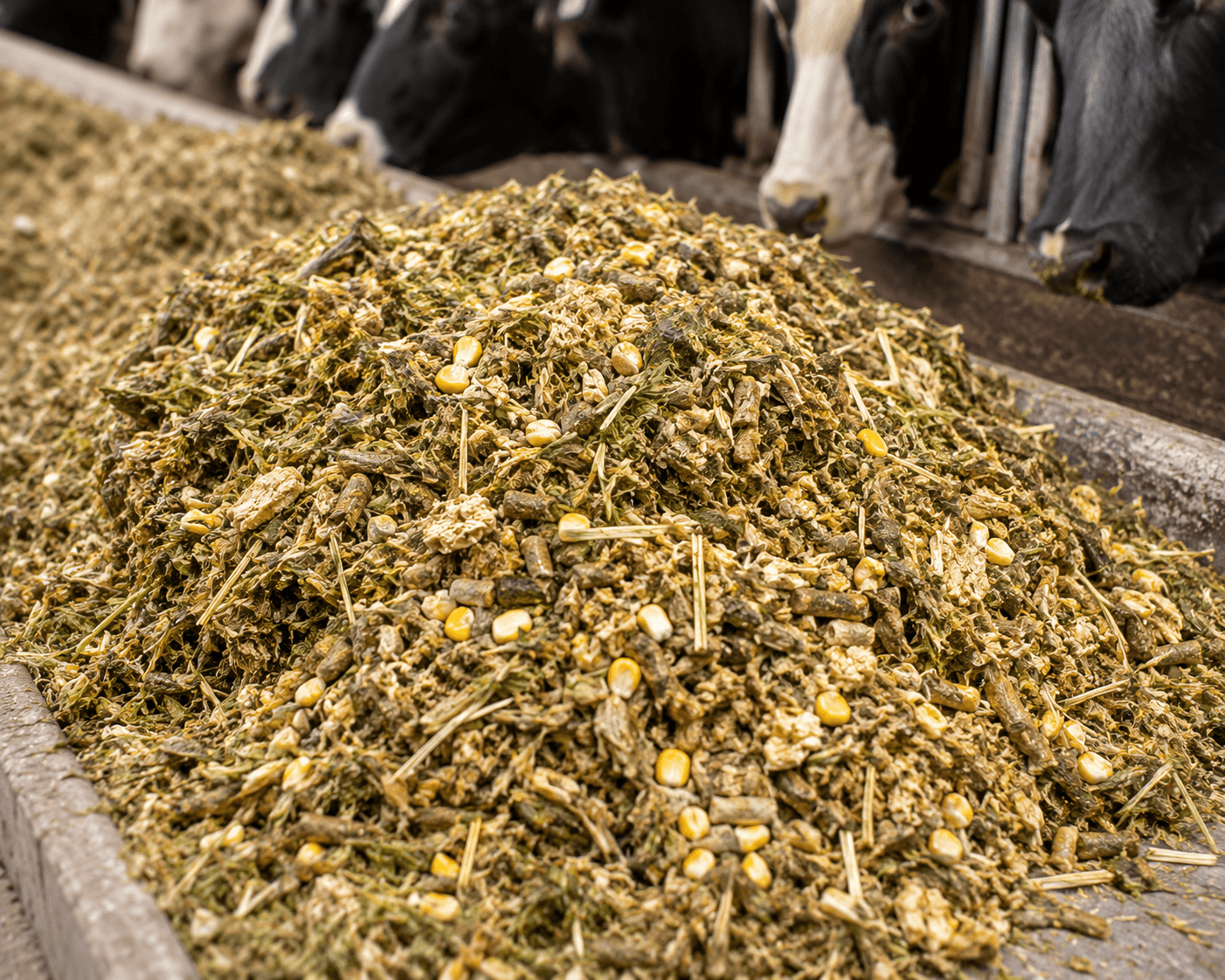
Total Mixed Ration (TMR) for Dairy Cattle
Complete guide to Total Mixed Ration (TMR) in Indian dairy: what TMR is, why it matters, how to formulate one, sample lactating buffalo TMR in kg, particle size, moisture, and common mistakes.
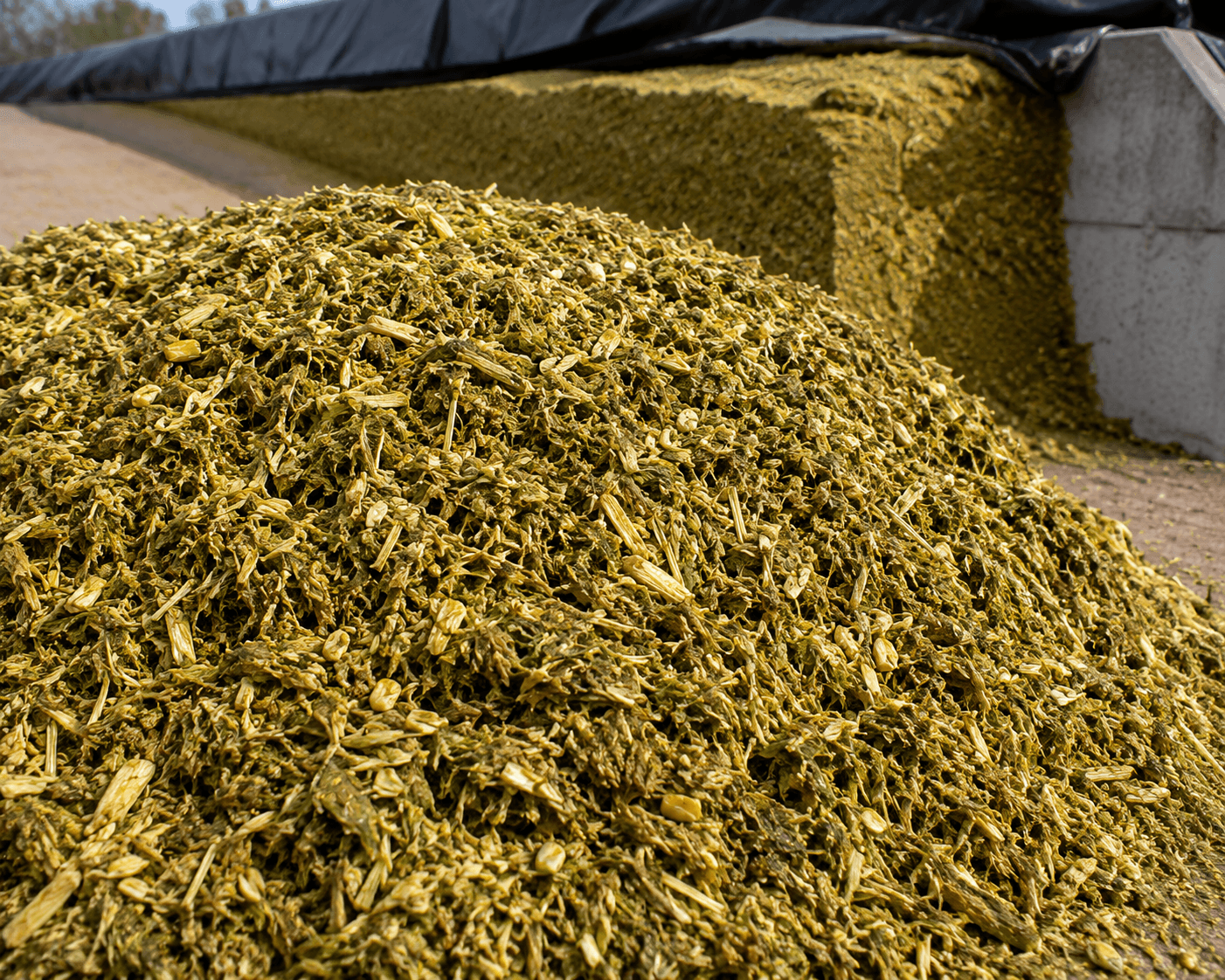
Silage Making for Cattle: Complete Guide
Complete guide to silage making for Indian dairy: what silage is, the maize silage process, moisture and chop length targets, sealing, fermentation stages, additives, quality checks, and common mistakes.
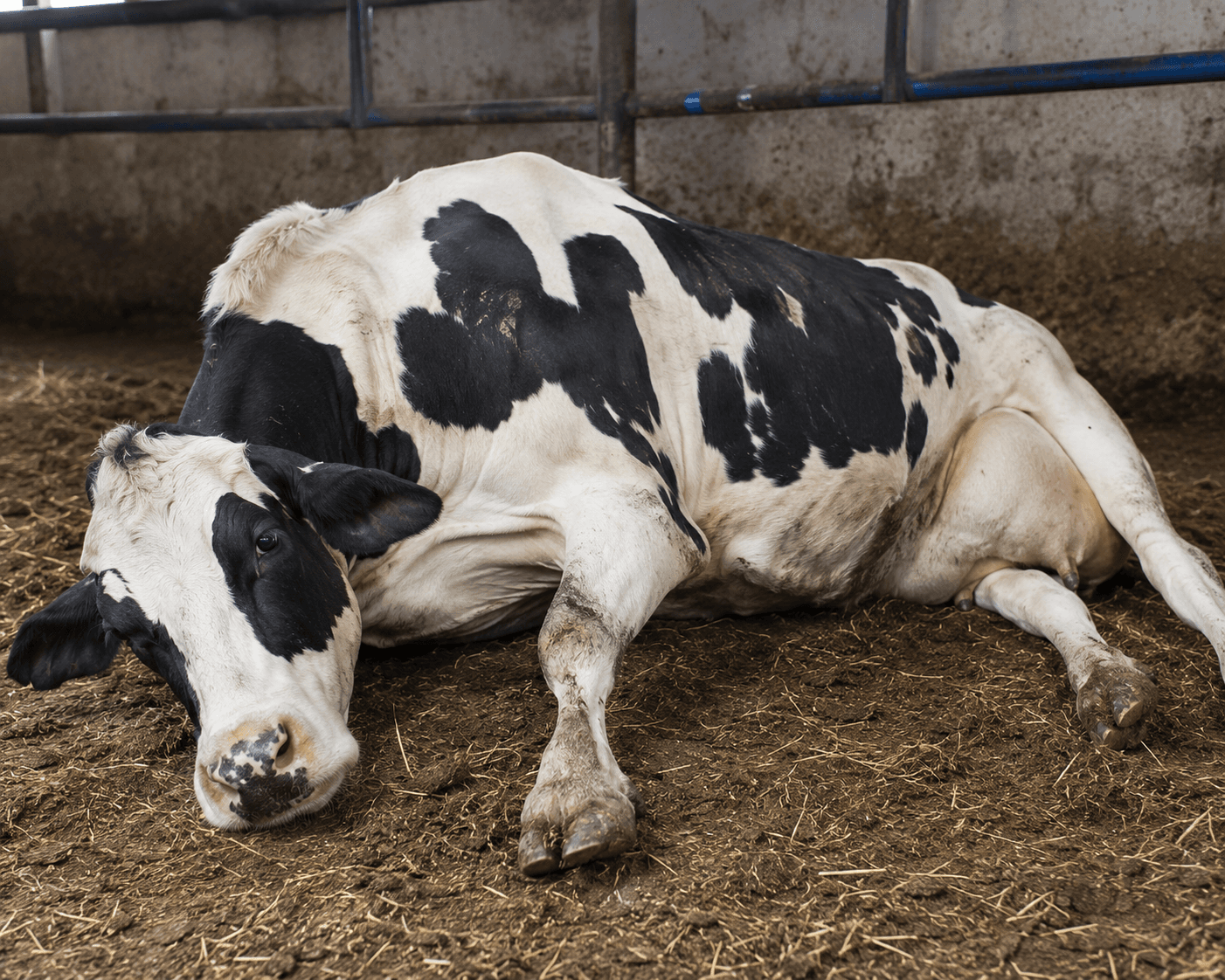
Milk Fever (Hypocalcaemia) in Dairy Cattle: Causes, Treatment & Prevention
Simple guide to milk fever in dairy cattle and buffalo: why it happens after calving, three stages of symptoms, IV calcium treatment, and how to prevent it through proper dry-period feeding.