Groundnut Cake (Mungphali Khal) in Cattle Feed
By Vrap · Published Mon May 18 2026 00:00:00 GMT+0000 (Coordinated Universal Time) · Updated Mon May 18 2026 00:00:00 GMT+0000 (Coordinated Universal Time)
What is groundnut cake?
Groundnut cake — known in India as mungphali khal — is the protein-rich residue left over after pressing groundnut (peanut) seeds to extract groundnut oil. At 38–45% crude protein in the decorticated expeller form, it is the highest-protein oilseed cake widely used in Indian cattle feed — exceeding even the 22% protein of cotton seed cake and the 28–32% of mustard cake.
But the high protein comes with the largest single quality risk among Indian oilseed cakes: aflatoxin contamination. This single factor — more than nutrition, more than price — shapes how groundnut cake is sourced, stored, and used in modern Indian dairy. The current India market price for groundnut cake is updated daily on our groundnut cake price page.
The coin: how groundnut cake is shaped and sold
A distinctive feature of Indian groundnut cake is its coin form. When the oil is pressed out of groundnut seed in a traditional expeller, the residual cake comes out as round, flat discs — called coins in the trade. The size of these coins varies by mill and is one of the visible signals of the supplier's processing scale.
| Coin size | Typical diameter | Weight per coin | Mill scale |
|---|---|---|---|
| Small coin (chhota coin) | 1–2 inches | 50–100 g | Smaller expellers, traditional oil mills |
| Medium coin | 2–4 inches | 100–200 g | Mid-sized mills |
| Large coin (bada coin) | 4–6 inches | 200–400 g | Larger mills with higher-tonnage presses |
| Broken cake | — | Variable | Larger mills selling to compound feed manufacturers |
The coin size itself doesn't determine nutritional quality — that's set by the protein, fat, and fibre numbers on the Certificate of Analysis. But coin size is a useful market signal: smaller coins typically come from smaller, regional mills; larger coins from industrial-scale plants. Feed mills that buy in bulk often request broken cake rather than whole coins, because broken material is easier to grind and incorporate into pelleted compound feed.
For a smallholder dairy farmer buying directly, whole coins are easier to handle, store, and dose. The farmer breaks each coin into smaller pieces at feeding time. For a feed mill, broken cake is more efficient — no need for an additional crushing step before grinding.
Two main types of groundnut cake
Expeller cake (decorticated, kachi ghani)
Traditional Indian processing. Groundnuts are decorticated (shells removed), pressed in an expeller, and the residue comes out as the recognisable coin-shape cake. The most common feed-grade product in the Indian market.
| Parameter | Typical value |
|---|---|
| Crude protein | 38–45% |
| Crude fat (residual oil) | 6–10% |
| Crude fibre | 7–10% |
| Moisture | 8–10% |
Solvent-extracted (Groundnut Meal / GNM)
Solvent-extraction plants use hexane to remove almost all the residual oil, recovering refined-grade oil for the edible-oil industry. The resulting "groundnut meal" is higher in protein per kilogram but much lower in fat.
| Parameter | Typical value |
|---|---|
| Crude protein | 45–50% |
| Crude fat | 1–2% |
| Crude fibre | 8–10% |
| Moisture | 8–10% |
Undecorticated cake (with shell)
Less common in modern Indian feed mills. The shell (hull) is left on during pressing, giving a higher-fibre, lower-protein product. Used in lower-grade animal feed where fibre is not a problem.
| Parameter | Typical value |
|---|---|
| Crude protein | 28–32% |
| Crude fat | 5–7% |
| Crude fibre | 18–22% |
| Moisture | 8–10% |
For cattle feed mills and dairy farms, decorticated expeller cake at 38–45% protein is the standard product. Solvent-extracted GNM is used by larger compound feed manufacturers where protein density per rupee is the priority.
Nutritional profile
| Parameter | Decorticated expeller | Solvent-extracted GNM |
|---|---|---|
| Crude protein | 38–45% | 45–50% |
| Crude fat | 6–10% | 1–2% |
| Crude fibre | 7–10% | 8–10% |
| TDN | 75–80% | 70–75% |
| Calcium | 0.15% | 0.15% |
| Phosphorus | 0.55% | 0.55% |
| Amino acid quality | Good (high arginine); limiting in lysine and methionine |
Groundnut cake's amino acid profile is good — better than mustard cake or cotton seed cake — but still limiting in lysine and methionine compared to soybean meal. Pairing groundnut cake with soybean meal in compound feed gives the best amino acid balance.
To compute total DCP and TDN of any ration including groundnut cake, use our DCP and TDN calculator.
Aflatoxin: the defining quality concern
This is the section that matters most when buying groundnut cake. Groundnuts have the most serious aflatoxin profile of any common Indian feed ingredient — not because of how they grow, but because of how easily Aspergillus flavus and Aspergillus parasiticus moulds colonise groundnut kernels during harvest, drying, and storage.
The contamination pathway
- Groundnut pods in the soil are vulnerable to Aspergillus moulds, particularly when soil moisture is high or harvest is delayed by rain.
- Once kernels develop mould, aflatoxins (B1, B2, G1, G2) accumulate inside the kernel.
- Pressing the seed for oil does not destroy aflatoxins — they partition between the oil and the cake.
- Most of the aflatoxin in groundnuts ends up in the cake, since aflatoxins are water-soluble.
- The cake is then sold to feed mills or dairy farms.
Regulatory limits
| Standard | Aflatoxin B1 | Total aflatoxins |
|---|---|---|
| BIS / FSSAI — feed for dairy cattle | 20 µg/kg (ppb) max | 30 µg/kg (ppb) max |
| FSSAI — milk | M1 ≤ 0.5 µg/kg | — |
Real-world testing of groundnut cake samples from informal Indian markets has found aflatoxin B1 levels ranging from below detection limit (clean lots) to several hundred ppb (severely contaminated lots). The variability is enormous, and visual inspection cannot reliably detect contamination — a clean-looking, normal-smelling cake can still contain dangerous aflatoxin levels.
Why this matters financially
Even at sub-acute levels, aflatoxin causes:
- Reduced milk yield (often 10–20% drop)
- Impaired reproductive performance, longer inter-calving period
- Depressed feed conversion efficiency
- Suppressed immune function, more disease
- Direct liver damage at higher exposures
And because aflatoxin M1 is regulated in milk, contaminated feed can make your milk legally unsellable to processors who test inbound supplies. A single bad lot of groundnut cake can push an entire farm's milk into M1 rejection.
Practical defences
- Buy from reputable mills only. Established suppliers test before bagging.
- Insist on a CoA with explicit aflatoxin B1 testing. Reject lots above 20 ppb for dairy use.
- Avoid groundnut cake stored through Indian monsoon humidity — moisture above 12% promotes new mould growth in storage.
- Use mycotoxin binders (clay-based, activated charcoal, yeast cell wall) when sourcing during the monsoon or from unverified suppliers.
- Test new suppliers with an aflatoxin strip test on a sample lot.
- Consider skipping groundnut cake entirely during monsoon-affected months if cheaper, lower-risk protein sources (cotton seed cake, soybean meal) are available.
The aflatoxin risk is the single biggest reason many modern Indian compound feed mills cap groundnut cake inclusion well below what its protein content alone would justify.
Where groundnut cake is produced in India
Groundnut is grown mainly in the kharif season (sown June-July, harvested October-December) with a smaller rabi crop in southern states (sown November-December, harvested March-April). Production is concentrated in specific belts:
| State | Role in groundnut cake supply |
|---|---|
| Gujarat | India's largest producer, approximately 30–40% of national output. The Saurashtra region — Junagadh, Rajkot, Amreli, Jamnagar — is the heart of Indian groundnut and where most oil mills are concentrated. |
| Andhra Pradesh | Second-largest producer; major mills in the Anantapur and Chittoor districts |
| Karnataka | Northern Karnataka groundnut belt; mills serve the south Indian feed market |
| Tamil Nadu | Smaller but consistent producer; Tirupur, Vellore, Salem belt |
| Telangana | Growing producer, follows AP supply patterns |
| Rajasthan | Smaller acreage, mostly for direct consumption rather than cake |
For buyers outside the groundnut belt (north India, eastern India), groundnut cake arrives by truck and freight cost can be significant. In those regions, mustard cake or cotton seed cake is often cheaper at the landed price.
Inclusion rates by animal and life stage
The inclusion rates below assume the groundnut cake is aflatoxin-verified clean (CoA shows B1 ≤ 20 ppb). For unverified cake, treat all numbers as upper limits and consider reducing further.
| Animal / stage | Groundnut cake in concentrate mix | Notes |
|---|---|---|
| Lactating cow | 10–15% | Pair with soybean meal for amino acid balance |
| Lactating buffalo | 10–15% | Higher fat content helps reach the 5–7% dietary fat target |
| Calf starter (under 3 months) | Avoid entirely | Calves are highly aflatoxin-sensitive |
| Calf starter (3–6 months) | Max 5% | Only with confirmed clean cake |
| Heifers | 8–12% | Moderate inclusion |
| Dry cow / dry buffalo | 8–12% | Maintenance level |
| Adult sheep / goat | 8–12% | Similar tolerance to cattle |
| Bulls (breeding) | 5–10% | Lower to protect reproductive function |
The aflatoxin-driven caps are conservative. In Western dairies where aflatoxin testing is routine and lot rejection is standard, decorticated groundnut cake can be used at 20–25% inclusion. The lower Indian caps reflect the higher background aflatoxin risk in Indian groundnut and the variable quality of mill output.
Quality standards: what to check before buying
A reputable Certificate of Analysis for feed-grade groundnut cake should report:
| Parameter | Acceptable specification |
|---|---|
| Crude protein (min) | 38% for decorticated expeller, 45% for solvent-extracted GNM |
| Crude fat (min) | 6% for expeller, 1% for GNM |
| Crude fibre (max) | 10% (decorticated) or 22% (undecorticated) |
| Moisture (max) | 10% |
| Total ash (max) | 8% |
| Acid insoluble ash (max) | 2.5% |
| Aflatoxin B1 (max) | 20 ppb (BIS/FSSAI for dairy cattle feed) |
| Free fatty acid in oil | Under 3% (rancidity indicator) |
Always insist on explicit aflatoxin B1 reporting on the CoA. This is non-negotiable for groundnut cake — no other quality parameter matters as much. A supplier who cannot or will not test for aflatoxin should not be a long-term source.
Visual + smell checks before accepting delivery
- Cake colour: uniformly light to medium brown. Dark patches, especially black or olive-green, indicate mould — reject immediately
- Smell: fresh, mildly nutty, peanut-like. Sour, mouldy, fermented, or rancid smells = reject
- Moisture feel: dry, crumbles cleanly when broken. Soft, damp, or sticky = mould risk
- Visible mould or fungal growth in any quantity = reject the entire lot
- Insect activity in the cake = old/badly stored stock
Storage best practices
Groundnut cake is the most storage-sensitive of all the major Indian oilseed cakes, because:
- The high residual oil (6–10%) is rancidity-prone
- The same moisture conditions that allow rancidity also allow aflatoxin development in storage
- New mould growth in storage can multiply aflatoxin levels even after a clean lot has been received
Standard discipline:
- Buy in smaller quantities — 2 to 4 weeks of supply at a time, not 2 months
- Off-floor stacking on wooden or plastic pallets
- Bag stacking maximum 12–15 high
- Cool, dry storage below 30°C and 70% relative humidity
- FIFO rotation — first in, first out, no exceptions
- Avoid storing through monsoon — humidity over 70% RH dramatically raises both rancidity and aflatoxin risk
- Use mycotoxin binders in any ration containing significant groundnut cake during high-humidity months
Comparison vs other Indian protein cakes
| Ingredient | Crude protein | Crude fat | Inclusion (concentrate) | Limiting factor |
|---|---|---|---|---|
| Soybean meal (46% Normal) | 45–46% | 1% | 12–20% | Best profile; price |
| Groundnut cake (decorticated expeller) | 38–45% | 6–10% | 10–15% | Aflatoxin |
| Groundnut meal (solvent-extracted) | 45–50% | 1–2% | 10–15% | Aflatoxin |
| Mustard cake (DOMC) | 37% min | 1–2% | 10–15% | Glucosinolates |
| Mustard cake (expeller) | 28–32% | 6–10% | 10–15% | Glucosinolates |
| Cotton seed cake (premium expeller) | 22% | 12–14% | 15–25% | Gossypol |
Groundnut cake delivers the highest protein per kilogram of the three traditional cakes — but its aflatoxin risk caps how aggressively a careful feed mill will use it. In modern Indian compound feed manufacturing, a typical Type-1 or Type-2 formulation uses 5–10% groundnut cake alongside larger fractions of soybean meal and cotton seed cake.
Market dynamics
Groundnut cake prices in Indian wholesale markets are driven by:
- Groundnut crop arrivals — October to December is peak kharif arrival in Gujarat; price is softest then
- Groundnut oil price — cake is the by-product of oil pressing; when oil prices rise, mills crush more seed, cake supply rises
- Export demand — Indian groundnut cake exports to South-East Asia and the Middle East tighten domestic supply when active
- Substitution from other cakes — when cotton seed cake or mustard cake is unusually cheap, formulators reduce groundnut cake
- Aflatoxin-related rejection rates — heavy monsoon years produce more contaminated cake, narrowing the available "clean" supply and lifting prices for verified product
Conclusion
Groundnut cake — mungphali khal — is the highest-protein traditional oilseed cake in Indian cattle feed, with decorticated expeller cake delivering 38–45% crude protein and solvent-extracted meal delivering 45–50%. It comes from the Gujarat groundnut belt, particularly Saurashtra, and arrives at feed mills and farms in characteristic round coin shapes ranging from 1-inch chhota coins to 6-inch bada coins.
The defining discipline for any buyer is aflatoxin management. Insist on CoA-verified aflatoxin B1 levels at or below 20 ppb, buy from reputable mills only, store in small quantities, avoid monsoon-affected stock, and use mycotoxin binders when conditions warrant. Used carefully within these guardrails, groundnut cake remains one of the highest-ROI protein ingredients in Indian dairy nutrition. Used carelessly, it is the single ingredient most likely to put your milk into M1 rejection.
Frequently asked questions
What is mungphali khal?+
Why is groundnut cake measured in coin sizes?+
What is the protein content of groundnut cake?+
Why is aflatoxin the biggest concern with groundnut cake?+
Where is groundnut cake produced in India?+
What is the right inclusion rate of groundnut cake in cattle feed?+
Related articles
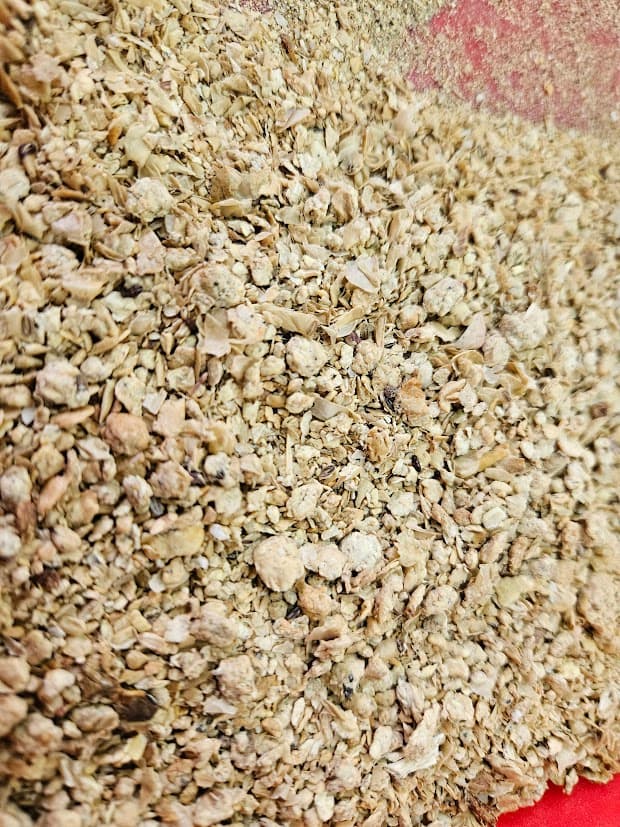
Soybean Meal in Cattle Feed
Complete guide to soybean meal in Indian cattle feed: the three grades (45/48/50% protein), BIS quality standards, inclusion rates for cow, buffalo, sheep, and goat, and where it is sourced in India.
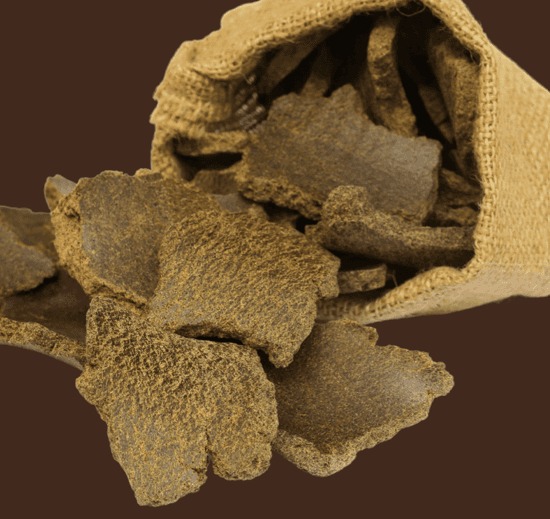
Mustard Cake (Sarson Khal) in Cattle Feed
Complete guide to mustard cake (sarson khal) in Indian cattle feed: 28-32% protein, expeller vs solvent-extracted types, glucosinolate limits, Rajasthan as the production hub, and the feed-vs-fertilizer dual market.
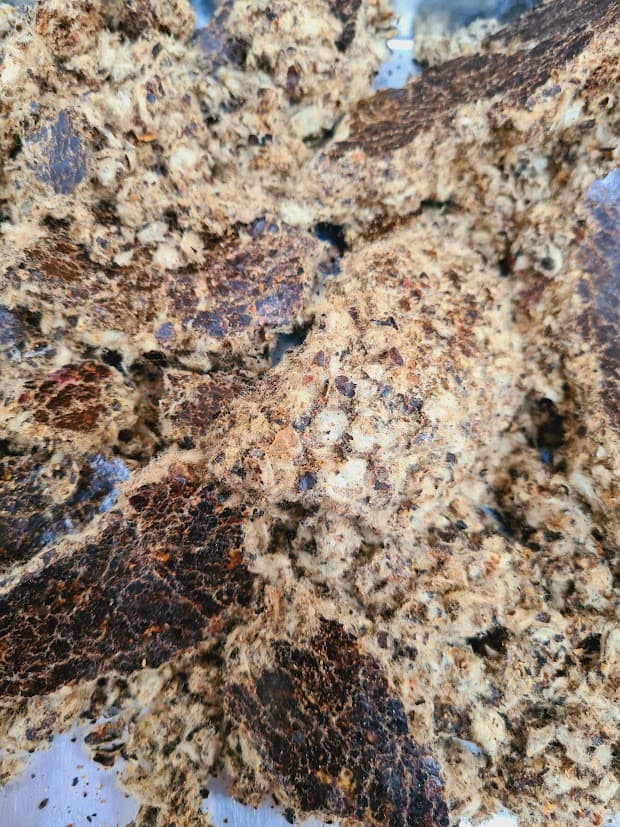
Cotton Seed Cake in Cattle Feed (Binola Khal)
Complete guide to cotton seed cake (binola khal) in Indian cattle feed: 22% protein and 12-14% fat for premium grade, gossypol tolerance, inclusion rates, thin vs thick shapes, and price dynamics.