Aflatoxin in Cattle Feed
By Vrap · Published Mon May 18 2026 00:00:00 GMT+0000 (Coordinated Universal Time) · Updated Mon May 18 2026 00:00:00 GMT+0000 (Coordinated Universal Time)
Why aflatoxin is the single most serious food-safety risk in Indian cattle feed
Of all the things that can go wrong in cattle nutrition — protein imbalance, mineral deficiency, fibre shortage, acidosis — only one issue regularly takes milk off the market and reaches the human consumer: aflatoxin contamination.
Aflatoxins are toxic, carcinogenic compounds produced by Aspergillus flavus and Aspergillus parasiticus moulds when they colonise crops under humid storage conditions. In cattle feed, aflatoxin B1 (the most toxic form) is regulated by the Bureau of Indian Standards (BIS) to a maximum of 20 µg/kg (ppb) in compound cattle feed. When a cow or buffalo ingests aflatoxin B1, a fraction converts to aflatoxin M1, which appears in the milk. FSSAI limits aflatoxin M1 in milk to 0.5 µg/kg — a level so low that even modest feed contamination can push milk into rejection.
This article walks through the regulatory framework, the raw materials most likely to introduce aflatoxin into a ration, how to test for it, and how mycotoxin binders break the pathway from feed to milk.
The 20 ppb pellet challenge
The BIS IS:2052 limit of 20 ppb aflatoxin B1 in compound cattle feed sounds like a clean, achievable number. In practice, it is one of the most difficult specifications a feed mill has to hit consistently — and the difficulty is mathematical.
A typical compound cattle feed pellet contains 6 to 8 ingredients, each contributing some fraction of the final mix. If even one or two ingredients arrive at the mill at moderately elevated aflatoxin levels (30, 50, 80 ppb), the blended pellet can easily exceed the 20 ppb ceiling.
A worked example. Suppose a Type-2 compound feed is formulated as:
| Ingredient | % of pellet | Aflatoxin B1 in this lot (ppb) | Contribution to pellet ppb |
|---|---|---|---|
| DORB | 25% | 25 | 6.25 |
| Maize | 20% | 45 | 9.0 |
| Soybean meal | 12% | 5 | 0.6 |
| Cotton seed cake | 15% | 15 | 2.25 |
| Groundnut cake | 10% | 60 | 6.0 |
| Wheat bran | 10% | 8 | 0.8 |
| Other (5 ingredients) | 8% | — | minimal |
| Pellet total | 100% | ~25 ppb — exceeds 20 ppb! |
In this example, no single ingredient is catastrophically contaminated, but the blend exceeds the BIS ceiling. The mill has only three options:
- Reject one of the high-contributing lots and reformulate (expensive)
- Add a toxin binder to reduce bioavailable aflatoxin in the animal (effective but adds cost)
- Source cleaner replacements for the problem lots (may not be available, especially during monsoon)
This is why aflatoxin control is not a one-time test — it is a continuous discipline that runs from every incoming truck of raw material through to the finished pellet bag.
The aflatoxin pathway: from soil to milk
Understanding where aflatoxin enters the supply chain helps a buyer position defences correctly. The pathway has five stages:
- Crop in the field. Aspergillus flavus spores are present in soil everywhere in India. Crops most vulnerable are groundnut, maize, and rice — particularly when growing conditions are stressed (drought + heat + humidity).
- Harvest. Wet harvests, delayed harvests after monsoon rain, and inadequate field drying allow Aspergillus to colonise the kernel before storage even begins.
- Storage at the farm or trader level. Moisture above 12% and humidity above 70% allow mould growth and aflatoxin accumulation. Storage that crosses the monsoon (June-September) is the highest-risk window in India.
- Processing into cake or meal. Oil pressing and solvent extraction do not destroy aflatoxin — most of it partitions into the cake/meal rather than the oil. A contaminated input produces a contaminated cake.
- Compounding and pelleting. Heat from steam conditioning during pellet manufacturing does not destroy aflatoxin either — it is heat-stable and acid-stable. Once in the feed, it stays.
The animal then ingests the feed, the rumen does not detoxify aflatoxin B1, the liver converts a fraction into aflatoxin M1, and M1 appears in milk within 12–24 hours.
Which raw materials are most prone to aflatoxin
A practical risk ranking for the raw materials commonly used in Indian compound cattle feed:
Highest risk
- Groundnut cake — Aspergillus loves groundnut. See the groundnut cake article for details. Lots from monsoon-affected groundnut can have hundreds of ppb.
- Maize DDGS (Distillers Dried Grains with Solubles) — the by-product of grain ethanol fermentation. The alcohol production removes starch but concentrates aflatoxin roughly 3× from the original maize. A maize at 30 ppb produces DDGS at 80-100 ppb.
- Maize — particularly monsoon-affected, wet-harvested, or poorly stored lots. See the maize article for moisture and aflatoxin discipline.
Moderate to rising risk
- DORB — historically considered low-risk, but emerging as a concern in recent years because solvent-extraction plants increasingly source from monsoon-wet paddy. See the DORB article for the BIS 20 ppb vs commercial 50 ppb spec distinction.
- Cotton seed cake — moderate risk, well-managed by reputable mills
- Mustard cake — lower risk than the others but not zero
- Wheat and jowar — moderate risk during humid storage
- Sunflower cake — moderate risk
Lower risk
- Soybean meal — Aspergillus colonisation is uncommon
- Wheat bran — lower than whole wheat
- Molasses — non-fermentable carbohydrate, doesn't support Aspergillus
- Mineral mixture, salt, vitamin premixes — no biological substrate for aflatoxin
The practical takeaway: any compound feed formula heavy on maize, maize DDGS, or groundnut cake needs the most aggressive aflatoxin discipline. A formula leaning on soybean meal + cotton seed cake + mustard cake carries lower inherent risk.
The government policy gap
There is an important asymmetry in Indian aflatoxin regulation:
| Layer | Aflatoxin B1 limit | Regulator | Enforcement |
|---|---|---|---|
| Finished compounded cattle feed (in 50 kg bag) | 20 ppb | BIS IS:2052 | Strong (BIS license, marketplace) |
| Milk | M1 under 0.5 µg/kg | FSSAI | Strong (processor-level testing) |
| Individual raw materials sold to feed mills | No enforced limit | — | None |
This is genuinely good policy at the consumer-facing end — the pellet and the milk both have hard ceilings. But the gap on raw materials means the entire burden of compliance falls on the compound feed manufacturer, who must test every incoming truck of maize, DORB, groundnut cake, and other susceptible inputs and decide whether to accept, reject, or blend down.
For dairy farmers who buy raw materials directly (rather than compound feed), the gap is more acute: there is no regulatory protection at all. A raw material can legally arrive at your farm at 200 ppb of aflatoxin B1 — the burden is entirely on you to test and reject. This is one of the strongest practical arguments for buying BIS-marked compound cattle feed over mixing your own ration from individual raw materials.
Aflatoxin testing: methods and costs
Three tiers of aflatoxin testing are used in Indian feed mills and (less commonly) on farms:
1. Rapid lateral-flow strip tests
The workhorse of practical aflatoxin control at the feed mill gate. Common products: Charm ROSA, Romer AgraStrip, Neogen Reveal, Vicam AflaTest. Typical workflow:
- Grind a 50-100 g sample of the incoming raw material
- Extract with methanol or proprietary buffer
- Apply extract to the lateral-flow strip
- Read result with a reader or visually after 5-10 minutes
- Quantitative readout in ppb of aflatoxin B1
Cost per test: ₹100-500. Detection range: typically 2-150 ppb. Accuracy: within ±20% of HPLC for most samples.
This is the test a feed mill uses on every incoming truck of maize, DORB, groundnut cake, and other susceptible inputs. The decision to accept or reject a load is made at the mill gate, not after the cake is already in the silo.
2. Color card / semi-quantitative kits
Cheaper but less precise. Compare a developed test strip against a reference colour card to get a rough quantitative range (e.g., 0-10, 10-20, 20-50, 50-100 ppb). Good for screening on smallholder farms where ±20% precision isn't needed. Cost: ₹50-200 per test.
3. Laboratory ELISA and HPLC
Most accurate. ELISA (enzyme-linked immunosorbent assay) and HPLC (high-performance liquid chromatography) are reference methods used by:
- BIS-certified testing labs
- Compound feed manufacturer QC labs
- Milk processor inbound testing
- Regulatory enforcement
Detection limit: 1-5 ppb. Turnaround: 24-72 hours from sample arrival. Cost: ₹500-2,000 per sample.
A working Indian feed mill uses rapid kits on every truck, sends borderline samples to ELISA/HPLC for confirmation, and tests finished pellets at the BIS-certified level for export-quality or AdSense-eligible label claims.
Toxin binders: how they break the aflatoxin pathway
Once aflatoxin is in the feed, the most effective intervention is a mycotoxin binder — an inert substance added to the ration that physically adsorbs aflatoxin molecules in the animal's digestive tract, preventing absorption into the bloodstream and downstream conversion to M1 in milk.
How binders work
A binder is a substance with a high surface area and specific molecular charge that adsorbs (binds onto its surface) aflatoxin molecules in the rumen and gut. The bound aflatoxin then passes through the digestive tract and is excreted in faeces — never absorbed, never reaching the liver, never converted to M1, never appearing in milk.
The binding is not permanent at the chemical level, but the binder-aflatoxin complex passes through the gut faster than the aflatoxin can detach. In practical terms, a good binder captures 70-95% of dietary aflatoxin before the animal absorbs it.
Types of binders
| Binder type | Active material | Aflatoxin B1 binding | Notes |
|---|---|---|---|
| Clay-based (inorganic) | Bentonite, HSCAS, montmorillonite, zeolite | 70–85% | Cheap, effective for B1; less effective for other mycotoxins |
| Activated charcoal | Carbonised plant material | 50–70% | Effective but binds other nutrients too |
| Yeast cell wall | Saccharomyces cerevisiae beta-glucans + mannans | 60–80% | Effective for B1 plus zearalenone, fumonisins, T-2 toxin |
| Esterified glucomannans | Modified yeast-derived polysaccharides | 70–85% | Higher-end binders; broad-spectrum |
| Combination products | Clay + yeast + other actives | 80–95% | Most common premium products; broad-spectrum |
HSCAS (Hydrated Sodium Calcium Aluminosilicate) is the most extensively studied and approved binder globally. Indian feed mills use HSCAS-based products widely.
Dosing
Typical inclusion: 1–2 kg of binder per ton of feed (0.1–0.2% of total feed weight). For a buffalo eating 5 kg of concentrate per day, that's 5–10 g of binder per animal per day.
| Risk level | Binder inclusion |
|---|---|
| Low-risk feed (clean inputs, dry season) | 0.05–0.10% of feed (0.5–1 kg/ton) |
| Normal monsoon risk | 0.10–0.15% of feed (1–1.5 kg/ton) |
| High risk (suspect inputs, monsoon-stored maize/groundnut) | 0.15–0.25% of feed (1.5–2.5 kg/ton) |
| Confirmed contamination episode | 0.25–0.50% of feed (2.5–5 kg/ton), with vet/nutritionist guidance |
Cost
Toxin binders are priced ₹50–200 per kg depending on type. At a typical 1.5 kg/ton inclusion, the cost works out to ₹75–300 per ton of feed — or ₹0.40-1.50 per animal per day for a buffalo eating 5 kg of concentrate. This is one of the highest-ROI defensive purchases a dairy can make.
Aflatoxin M1 in milk: the downstream problem
When a cow or buffalo ingests aflatoxin B1, the liver converts a fraction (typically 1–3%) into aflatoxin M1, which appears in milk within 12–24 hours and can persist for several days after exposure stops.
Why M1 matters
- FSSAI limit: ≤ 0.5 µg/kg in milk
- Processor testing: Large dairy processors (Amul, Nestlé, Mother Dairy, NDDB-linked cooperatives) test inbound milk for M1
- Rejection consequence: A consignment that fails M1 testing is rejected at the dock, and persistent failures can lead to supplier delisting
- Public health concern: M1 is a confirmed human carcinogen, with infants and children most vulnerable through dairy consumption
How feed B1 translates to milk M1
A rough working approximation used by Indian dairy nutritionists:
If feed B1 = 20 ppb (the BIS ceiling), milk M1 = approximately 0.2-0.4 µg/kg — usually safe
If feed B1 = 50 ppb, milk M1 ≈ 0.5-1.0 µg/kg — at or above the FSSAI limit
If feed B1 = 100 ppb, milk M1 ≈ 1.0-2.0 µg/kg — milk will be rejected
This is why the BIS feed ceiling of 20 ppb is the right number — it builds in a 2–3× safety margin to the milk M1 ceiling.
Practical defences for an Indian dairy
A layered approach, in order of impact:
- Buy BIS-compliant compound cattle feed instead of mixing your own from raw materials. The manufacturer absorbs the testing burden.
- For farm-mixed concentrates, source raw materials from reputable mills that publish CoAs including aflatoxin B1 values.
- Use a toxin binder at 1–2 kg per ton of feed, year-round in monsoon-affected regions, year-round if you use significant maize or groundnut cake.
- Reject obviously mouldy raw materials — visible mould is just the tip; aflatoxin can be present without visible mould, but visible mould always implies high risk.
- Store inputs dry — moisture below 12% prevents new mould growth, but cannot reverse existing contamination.
- Test new suppliers — a rapid kit test on a representative sample before committing to a multi-ton order saves money and milk.
- Avoid storing inputs through the monsoon — buy smaller, more frequent batches in June-September rather than stockpiling.
- Maintain mineral mixture and vitamin premix inclusion — well-nourished animals show less clinical impact from sub-acute aflatoxin exposure than poorly-nourished ones.
Conclusion
Aflatoxin is the single most serious food-safety issue in Indian cattle feed. The BIS limit of 20 ppb B1 in compound feed and the FSSAI limit of 0.5 µg/kg M1 in milk are the regulatory ceilings — but the supply chain between them is where aflatoxin is actually managed, day by day, truck by truck, at the feed mill gate.
The highest-risk raw materials are groundnut cake, maize DDGS, and monsoon-affected maize; DORB has recently joined the moderate-risk tier. Rapid lateral-flow test kits make aflatoxin testing fast and affordable enough for routine use at every mill, and mycotoxin binders at 1–2 kg per ton of feed break the pathway from feed B1 to milk M1 cost-effectively. The biggest gap in the regulatory framework is the absence of enforced limits on raw materials — which means buyers, not regulators, carry the weight of input quality decisions.
For an Indian dairy operator, aflatoxin discipline is not optional — it determines whether your milk sells, whether your animals stay productive, and whether your operation is profitable. The good news: every tool needed to manage it is available, affordable, and works.
Frequently asked questions
What is aflatoxin and why does it matter in cattle feed?+
What is the BIS limit for aflatoxin in compound cattle feed?+
Which raw materials are most prone to aflatoxin contamination?+
How is aflatoxin tested at a feed mill or farm?+
How do toxin binders work?+
Is there a government limit on aflatoxin in raw materials, or only on finished feed?+
Related articles

Maize DDGS, Rice DDGS and Maize DOC in Cattle Feed
Complete guide to DDGS in Indian cattle feed: Maize DDGS (28-30% protein, 8-10% fat), Rice DDGS (45% protein), Maize DOC (de-oiled, <2% fat). What different DDGS colours mean for quality, the critical aflatoxin risk, and inclusion rates.
Groundnut Cake (Mungphali Khal) in Cattle Feed
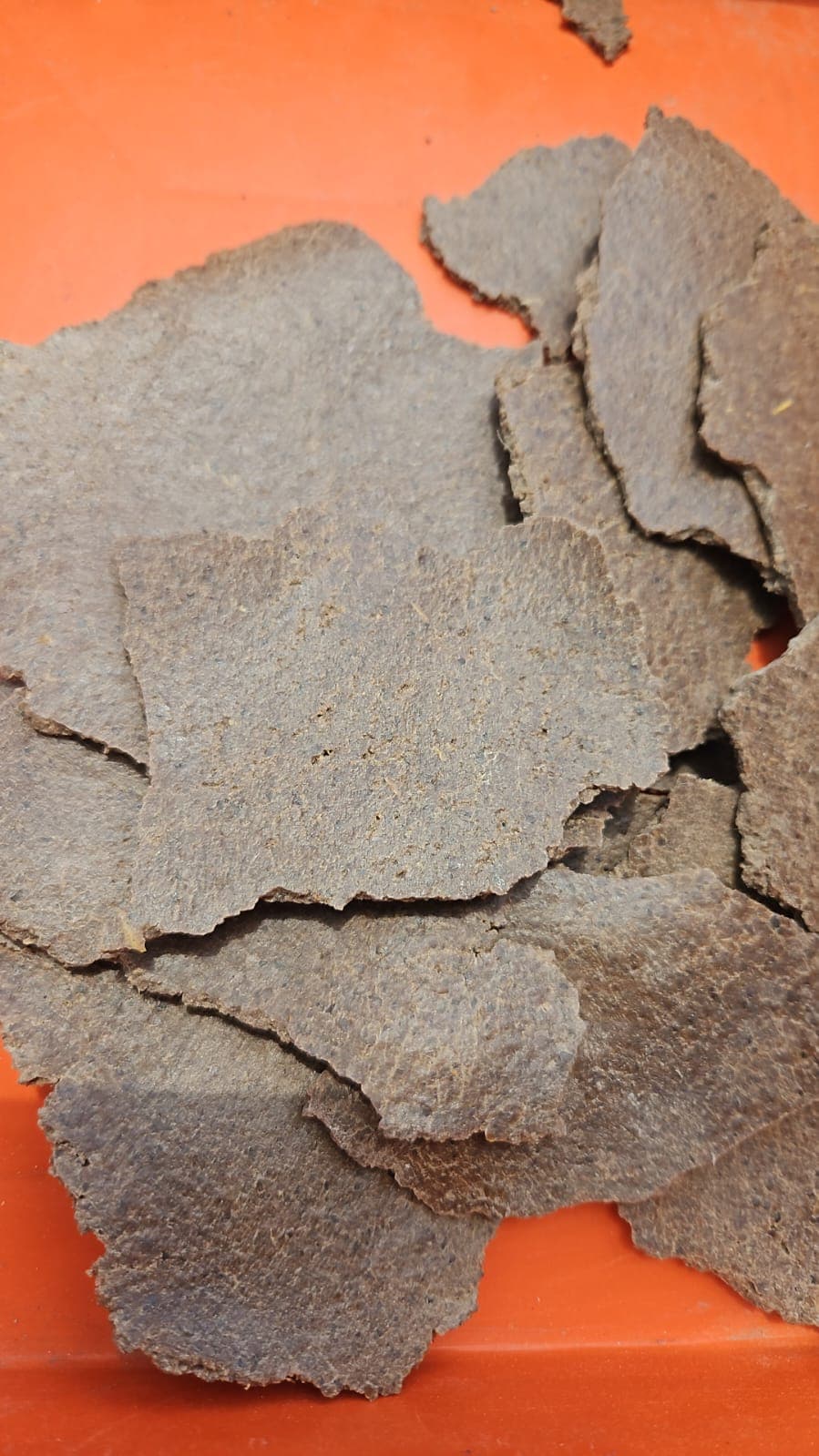
Complete guide to groundnut cake (mungphali khal) in Indian cattle feed: 38-45% protein, coin-shape sizing convention, the critical aflatoxin risk, BIS limits, Gujarat as the Saurashtra production hub, and inclusion rates.
Mineral Mixture for Cattle Feed
Complete guide to mineral mixture for Indian dairy: NDDB-prescribed formulation, function of each mineral, daily dose for milch animals and calves, area-specific products, and quality checks.